An adaptive algorithm is an algorithm that changes its behavior at the time it is run, based on information available and on a priori defined reward mechanism (or criterion). Such information could be the story of recently received data, information on the available computational resources, or other run-time acquired (or a priori known) information related to the environment in which it operates. Among the most used adaptive algorithms is the Widrow-Hoff’s least mean squares (LMS), which represents a class of stochastic gradient-descent algorithms used in adaptive filtering and machine learning. In adaptive filtering the LMS is used to mimic a desired filter by finding the filter coefficients that relate to producing the least mean square of the error signal (difference between the desired and the actual signal). For example, stable partition, using no additional memory is O(n lg n) but given O(n) memory, it can be O(n) in time. As implemented by the C++ Standard Library, stable_partition is adaptive and so it acquires as much memory as it can get (up to what it would need at most) and applies the algorithm using that available memory. Another example is adaptive sort, whose behavior changes upon the presortedness of its input. An example of an adaptive algorithm in radar systems is the constant false alarm rate (CFAR) detector. In machine learning and optimization, many algorithms are adaptive or have adaptive variants, which usually means that the algorithm parameters such as learning rate are automatically adjusted according to statistics about the optimisation thus far (e.g. the rate of convergence). Examples include adaptive simulated annealing, adaptive coordinate descent, adaptive quadrature, AdaBoost, Adagrad, Adadelta, RMSprop, and Adam. In data compression, adaptive coding algorithms such as Adaptive Huffman coding or Prediction by partial matching can take a stream of data as input, and adapt their compression technique based on the symbols that they have already encountered. In signal processing, the Adaptive Transform Acoustic Coding (ATRAC) codec used in MiniDisc recorders is called "adaptive" because the window length (the size of an audio "chunk") can change according to the nature of the sound being compressed, to try to achieve the best-sounding compression strategy.
Automated negotiation
Automated negotiation is a form of interaction in systems that are composed of multiple autonomous agents, in which the aim is to reach agreements through an iterative process of making offers. Automated negotiation can be employed for many tasks human negotiators regularly engage in, such as bargaining and joint decision making. The main topics in automated negotiation revolve around the design of protocols and negotiating strategies. == History == Through digitization, the beginning of the 21st century has seen a growing interest in the automation of negotiation and e-negotiation systems, for example in the setting of e-commerce. This interest is fueled by the promise of automated agents being able to negotiate on behalf of human negotiators, and to find better outcomes than human negotiators. == Examples == Examples of automated negotiation include: Online dispute resolution, in which disagreements between parties are settled. Sponsored search auction, where bids are placed on advertisement keywords. Content negotiation, in which user agents negotiate over HTTP about how to best represent a web resource. Negotiation support systems, in which negotiation decision-making activities are supported by an information system.
Blacker (security)
Blacker (styled BLACKER) is a U.S. Department of Defense computer network security project designed to achieve A1 class ratings (very high assurance) of the Trusted Computer System Evaluation Criteria (TCSEC). The first Blacker program began in the late 1970s, with a follow-on eventually producing fielded devices in the late 1980s. It was the first secure system with trusted end-to-end encryption on the United States' Defense Data Network. The project was implemented by SDC (software), and Burroughs (hardware), and after their merger, by the resultant company Unisys.
Trust federation
A trust federation is part of the evolving Identity Metasystem that will bring a new layer of persistent identity and trusted data sharing to the Internet. Although the concept of trust federations is technology neutral, several protocols like SAML, OpenID, Information Card, XDI can handle the challenges of technical interoperability. The challenge of business and social interoperability requires a new type of cooperative association similar to a credit card association. Instead of banks, however, a trust federation is an alliance of i-brokers and their customers who agree to abide by a common set of agreements in the care and handling of customer data. A model for trust federations is offered by Open Identity Exchange and Kantara Initiative, which is applied in the U.S. Government ICAM Trust Framework. Some operational trust federations are: InCommon (academic, USA) REFEDs (Research and Education Federations, Europe) IGTF Interoperable Global Trust Federation Portalverbund Government Portal Federation, Austria Trust federations are not limited to the social web use case, but apply to all federations where trust in identity and compliance to other objectives of information security such as confidentiality, integrity and privacy is brokered.
Weird SoundCloud
Weird SoundCloud, or SoundClown, is a mashup parody music scene taking place on the online distribution platform SoundCloud. The scene has been described by its producers and music journalists to be a satirical take on electronic dance music, and useless, throwaway internet content. One critic, Audra Schroeder, categorized it as an in-joke that is "deconstructing and reshaping memes and popular music, recontextualizing the sacred texts of millennial chat rooms." == Origins == In a January 2014 interview, DJ Kevin Wang suggested that the Weird SoundCloud has "been around in the last one to two years", but started to gain much more popularity the previous year through electronic dance music internet blogs. Weird SoundCloud producer Ideaot suggested that some in the phenomenon came from the YouTube poop scene. Another producer in the community, DJ @@ (AT-AT), reasoned that producers joining the scene "want to express their musicality, see it as a more mature form of YouTube Poop," or are "just looking for recognition on social media sites." AT-AT said that it was "a fun thing to do, and after I stopped making proper music I felt I needed a bit of an outlet for my creativity. The fact that people enjoyed it and/or treated it as a travesty (Direct quote from one of my tracks) spurs me on." == Characteristics == Weird SoundCloud is a mash-up and parody music genre labeled by journalist Audra Schroeder as an in-joke that is "deconstructing and reshaping memes and popular music, recontextualizing the sacred texts of millennial chat rooms." Most tracks range from around 30 seconds to one minute in length. The people who make weird SoundCloud are known as SoundClowns, a term coined by producer Dicksoak. Ideaot described the weird SoundCloud community as "largely just people who are friends with each other." Noisey critic Ryan Bassil spotlight the variety of music coming out of the weird SoundCloud landscape: "One minute you could be listening to the Seinfeld theme reimagined as an aneurysm inducing dubstep corker, the next, you're recovering from hearing a version of Tenacious D's "Tribute" that's akin to having a stroke." Bassil analyzes that the tracks "often take the past and repurpose it into something that, although not altogether useful, sounds fresh and reflective of the abstract, confusing panoramic that encapsulates the modern internet." Bassil compared the lexicon of SoundClown's track titles to that of Reddit and Twitter users. According to Dicksoak, most works of the style are critiques of EDM or "are just uploaded because they sound funny." However, Bassil disagreed, writing that there are also many tracks that keep repurposing a certain meme, such as "mom's spaghetti" or the re-use of vocals from recordings by hip hop group Death Grips. He describe the scene's re-use of memes as a satirical take on pointless online content that is only on the internet to "do nothing other than fill the void": They're changing the format of the original work's intended message or audience - a technique often employed by top-tier digital media companies - and in doing so they're sarcastically, ironically, taking the piss out of what Web 2.0's turned into - an open arena where the most ridiculous, unashamed, often pointless piggy-back content can rack up thousands and thousands of clicks. == Notable examples == There are mash-ups that "disrupt the flow of popular music", in the words of writer Schroeder, such as a "flutedrop" remix of the Miley Cyrus song "Wrecking Ball" and Shaliek's mashup of music by Bruno Mars and Korn. In November 2013, Wang released a set of mp3 files on SoundCloud named Best Drops Ever, which included tracks like "A Drop So Epic a Bunch of NYU Bros Already Bought a 3-Day Weekend Pass for It" and "A Drop So Crazy You'll Kill Your Family". All of the tracks start as normal electronic dance music build-ups, before they drop into a "bait and switch" audio or film clip such as Filet-O-Fish commercials, the Whitney Houston song "I Will Always Love You" and the film Bambi (1942) that ruins the anticipation. The collection is a parody of the over-importance and over-focus of the drop and lack of care of the overall quality of a song common in the modern electronic dance music scene. Wang has released more than 45 tracks in the weird SoundCloud, some of them receiving around a million plays. Subgenres of Weird SoundCloud include Macklecore, mash-ups and remixes that include the works of American hip-hop recording artist Macklemore, and Biggiewave, which include samples of songs from the album Ready to Die (1994) by The Notorious B.I.G. Common audio and meme sources used include Skrillex, the Martin Garrix track "Animals", Thomas the Tank Engine, Shrek, Macklemore, "Gangnam Style", the Bruno Mars track "Uptown Funk", the Disturbed track "Down with the Sickness", Space Jam, the Childish Gambino track "Bonfire", the Death Grips track "Takyon" and air horn sound effects. == Reception == Bassil praised the SoundClown scene as "loveable and strangely honest", reasoning that it "just reminds me that we're all humans on the internet, all searching for #content that means something, something to connect with, but usually only dredging up bastardised versions of things we've already read, seen, or watched before." Bassil also described the weird SoundCloud as a more successful version of a similar scene known as weird YouTube; the reason for the success of SoundClowns is due to SoundCloud's discovery algorithm: "Small collectives and trends are able to form, and there's an abundance of tracks from artists who are almost forging careers out of it, as opposed to uploading one viral hit." Publications have made lists of weird SoundCloud works, such as BuzzFeed's "23 Of The Weirdest Songs On Soundcloud", Obsev's "Weird SoundCloud Mashups That Must've Been Made While Drunk", and Thump's "9 of the Best and Most Upsetting Soundclowns we Could Find", where writer Isabelle Hellyer called it the "most influential genre of music in human history." A Your EDM writer called it "oddly addicting."
Nouvelle AI
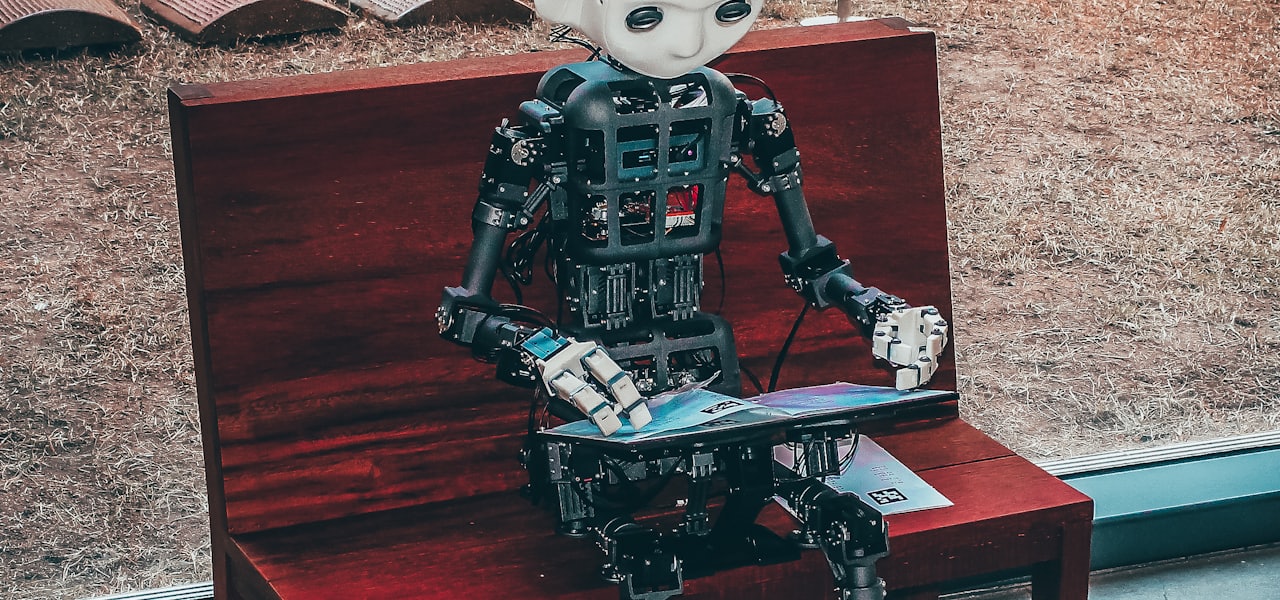
Nouvelle artificial intelligence (Nouvelle AI) is an approach to artificial intelligence pioneered in the 1980s by Rodney Brooks, who was then part of MIT artificial intelligence laboratory. Nouvelle AI differs from classical AI by aiming to produce robots with intelligence levels similar to insects. Researchers believe that intelligence can emerge organically from simple behaviors as these intelligences interacted with the "real world", instead of using the constructed worlds which symbolic AIs typically needed to have programmed into them. == Motivation == The differences between nouvelle AI and symbolic AI are apparent in early robots Shakey and Freddy. These robots contained an internal model (or "representation") of their micro-worlds consisting of symbolic descriptions. As a result, this structure of symbols had to be renewed as the robot moved or the world changed. Shakey's planning programs assessed the program structure and broke it down into the necessary steps to complete the desired action. This level of computation required a large amount time to process, so Shakey typically performed its tasks very slowly. Symbolic AI researchers had long been plagued by the problem of updating, searching, and otherwise manipulating the symbolic worlds inside their AIs. A nouvelle system refers continuously to its sensors rather than to an internal model of the world. It processes the external world information it needs from the senses when it is required. As Brooks puts it, "the world is its own best model--always exactly up to date and complete in every detail." A central idea of nouvelle AI is that simple behaviors combine to form more complex behaviors over time. For example, simple behaviors can include elements like "move forward" and "avoid obstacles." A robot using nouvelle AI with simple behaviors like collision avoidance and moving toward a moving object could possibly come together to produce a more complex behavior like chasing a moving object. === The frame problem === The frame problem describes an issue with using first-order logic (FOL) to express facts about a robot in the world. Representing the state of a robot with traditional FOL requires the use of many axioms (symbolic language) to imply that things about an environment do not change arbitrarily. Nouvelle AI seeks to sidestep the frame problem by dispensing with filling the AI or robot with volumes of symbolic language and instead letting more complex behaviors emerge by combining simpler behavioral elements. === Embodiment === The goal of traditional AI was to build intelligences without bodies, which would only have been able to interact with the world via keyboard, screen, or printer. However, nouvelle AI attempts to build embodied intelligence situated in the real world. Brooks quotes approvingly from the brief sketches that Turing gave in 1948 and 1950 of the "situated" approach. Turing wrote of equipping a machine "with the best sense organs that money can buy" and teaching it "to understand and speak English" by a process that would "follow the normal teaching of a child." This approach was contrasted to the others where they focused on abstract activities such as playing chess. == Brooks' robots == === Insectoid robots === Brooks focused on building robots that acted like simple insects while simultaneously working to remove some traditional AI characteristics. He created insect-like robots, named Allen and Herbert after cognitive science and AI pioneers Allen Newell and Herbert A. Simon. Brooks's insectoid robots contained no internal models of the world. Herbert, for example, discarded a high volume of the information received from its sensors and never stored information for more than two seconds. ==== Allen ==== Allen had a ring of twelve ultrasonic sonars as its primary sensors and three independent behavior-producing modules. These modules were programmed to avoid both stationary and moving objects. With only this module activated, Allen stayed in the middle of a room until an object approached and then it ran away while avoiding obstacles in its way. ==== Herbert ==== Herbert used infrared sensors to avoid obstacles and a laser system to collect 3D data over a distance of about 12 feet. Herbert also carried a number of simple sensors in its "hand." The robot's testing ground was the real world environment of the busy offices and workspaces of the MIT AI lab where it searched for empty soda cans and carried them away, a seemingly goal-oriented activity that emerged as a result of 15 simple behavior units combining. As a parallel, Simon noted that an ant's complicated path is due to the structure of its environment rather than the depth of its thought processes. ==== Other insectoid robots ==== Other robots by Brooks' team were Genghis and Squirt. Genghis had six legs and was able to walk over rough terrain and follow a human. Squirt's behavior modules had it stay in dark corners until it heard a noise, then it would begin to follow the source of the noise. Brooks agreed that the level of nouvelle AI had come near the complexity of a real insect, which raised a question about whether or not insect level-behavior was and is a reasonable goal for nouvelle AI. === Humanoid robots === Brooks' own recent work has taken the opposite direction to that proposed by Von Neumann in the quotations "theorists who select the human nervous system as their model are unrealistically picking 'the most complicated object under the sun,' and that there is little advantage in selecting instead the ant, since any nervous system at all exhibits exceptional complexity." ==== Cog ==== In the 1990s, Brooks decided to pursue the goal of human-level intelligence and, with Lynn Andrea Stein, built a humanoid robot called Cog. Cog is a robot with an extensive collection of sensors, a face, and arms (among other features) that allow it to interact with the world and gather information and experience so as to assemble intelligence organically in the manner described above by Turing. The team believed that Cog would be able to learn and able to find a correlation between the sensory information it received and its actions, and to learn common sense knowledge on its own. As of 2003, all development of the project had ceased.
Social search
Social search is a behavior of retrieving and searching on a social searching engine that mainly searches user-generated content such as news, videos and images related search queries on social media like Facebook, LinkedIn, Twitter, Instagram and Flickr. It is an enhanced version of web search that combines traditional algorithms. The idea behind social search is that instead of ranking search results purely based on semantic relevance between a query and the results, a social search system also takes into account social relationships between the results and the searcher. The social relationships could be in various forms. For example, in LinkedIn people search engine, the social relationships include social connections between searcher and each result, whether or not they are in the same industries, work for the same companies, belong the same social groups, and go the same schools, etc. Social search may not be demonstrably better than algorithm-driven search. In the algorithmic ranking model that search engines used in the past, relevance of a site is determined after analyzing the text and content on the page and link structure of the document. In contrast, search results with social search highlight content that was created or touched by other users who are in the Social Graph of the person conducting a search. It is a personalized search technology with online community filtering to produce highly personalized results. Social search takes many forms, ranging from simple shared bookmarks or tagging of content with descriptive labels to more sophisticated approaches that combine human intelligence with computer algorithms. Depending on the feature-set of a particular search engine, these results may then be saved and added to community search results, further improving the relevance of results for future searches of that keyword. The principle behind social search is that human network oriented results would be more meaningful and relevant for the user, instead of computer algorithms deciding the results for specific queries. == Research and implementations == Over the years, there have been different studies, researches and some implementations of Social Search. In 2008, there were a few startup companies that focused on ranking search results according to one's social graph on social networks. Companies in the social search space include Sproose, Mahalo, Jumper 2.0, Scour, Wink, Eurekster, and Delver. Former efforts include Wikia Search. In 2008, a story on TechCrunch showed Google potentially adding in a voting mechanism to search results similar to Digg's methodology. This suggests growing interest in how social groups can influence and potentially enhance the ability of algorithms to find meaningful data for end users. There are also other services like Sentiment that turn search personal by searching within the users' social circles. In 2009, a startup project called HeyStaks (www.heystaks.com) developed a web browser plugin "HayStaks". HeyStaks applies social search through collaboration in web search as a way that leads to better search results. The main motivation for HeyStaks to work on this idea is to provide the user with features that search engines didn't provide at that time. For instance, different searches have indicated that about 70% of the time when user search for something, a friend or a coworker have found it already. Also, studies have shown that approximately, 30% of people who use online search, search for something that they have found before. The startup believe that they help avoid these kind of issues by providing a shared and rich search experience through a list of recommendations that get generated based on search results. In October 2009, Google rolled out its "Social Search"; after a time in beta, the feature was expanded to multiple languages in May 2011. Before the expansion however in 2010 Bing and Google were already taking into account re-tweets and Likes when providing search results. However, after a search deal with Twitter ended without renewal, Google began to retool its Social Search. In January 2012, Google released "Search plus Your World", a further development of Social Search. The feature, which is integrated into Google's regular search as an opt-out feature, pulls references to results from Google+ profiles. The goal was to deliver better, more relevant and personalized search results with this integration. This integration however had some problems in which Google+ still is not wildly adopted or has much usage among many users. Later on, Google was criticized by Twitter for the perceived potential impact of "Search plus Your World" upon web publishers, describing the feature's release to the public as a "bad day for the web", while Google replied that Twitter refused to allow deep search crawling by Google of Twitter's content. By Google integrating Google+, the company was encouraging users to switch to Google's social networking site in order to improve search results. One famous example occurred when Google showed a link to Mark Zuckerberg's dormant Google+ account rather than the active Facebook profile. In November 2014 these accusations started to die down because Google's Knowledge Graph started to finally show links to Facebook, Twitter, and other social media sites. In December 2008, Twitter had re-introduced their people search feature. While the interface had since changed significantly, it allows you to search either full names or usernames in a straight-forward search engine. In January 2013, Facebook announced a new search engine called Graph Search still in the beta stages. The goal was to allow users to prioritize results that were popular with their social circle over the general internet. Facebook's Graph search utilized Facebook's user generated content to target users. Although there have been different researches and studies in social search, social media networks have not vested enough interest in working with search engines. LinkedIn for example has taken steps to improve its own individual search functions in order to stray users from external search engines. Even Microsoft started working with Twitter in order to integrate some tweets into Bing's search results in November 2013. Yet Twitter has its own search engine which points out how much value their data has and why they would like to keep it in house. In the end though social search will never be truly comprehensive of the subjects that matter to people unless users opt to be completely public with their information. == Social discovery == Social discovery is the use of social preferences and personal information to predict what content will be desirable to the user. Technology is used to discover new people and sometimes new experiences shopping, meeting friends or even traveling. The discovery of new people is often in real-time, enabled by mobile apps. However, social discovery is not limited to meeting people in real-time, it also leads to sales and revenue for companies via social media. An example of retail would be the addition of social sharing with music, through the iTunes music store. There is a social component to discovering new music Social discovery is at the basis of Facebook's profitability, generating ad revenue by targeting the ads to users using the social connections to enhance the commercial appeal. == Social search engines == A social search engine in an aspect can be thought of as a search engine that provides an answer for a question from another answer by identifying a person in the answer. That can happen by retrieving a user submitted query and determining that the query is related to the question; and provides an answer, including the link to the resource, as part of search results that are responsive to the query. Few social search engines depend only on online communities. Depending on the feature-set of a particular search engine, these results may then be saved and added to community search results, further improving the relevance of results for future searches of that keyword. Social search engines are considered a part of Web 2.0 because they use the collective filtering of online communities to elevate particularly interesting or relevant content using tagging. These descriptive tags add to the meta data embedded in Web pages, theoretically improving the results for particular keywords over time. A user will generally see suggested tags for a particular search term, indicating tags that have previously been added. An implementation of a social search engine is Aardvark. Aardvark is a social search engine that is based on the "village paradigm" which is about connecting the user who has a question with friends or friends of friends whom can answer his or her question. In Aadvark, a user ask a question in different ways that mostly involves online ways such as instant messaging, email, web input or other non-online ways such as text message or voice. The Aar